





The latest in our party blogs. We’ve covered most of them which you can see here.
Plaid Cymru look set to take up the first minister position in the newly overhauled Senedd for the first time. But, there is a lot still up in the air.
Riding a wave
Plaid’s support has always varied depending on what chamber is being elected, they’ve just about crept into double digits at Westminster elections but peaked at 31% at devolved level all the way back in 1997. Our polling average has them at 28% which is a little below their historic peak but is still the highest they’ve been in over 20 years, some polls are higher still.
Plaid and Labour - wave like support at Assembly/Senedd and Westminster
A large part of this variation comes from turnout fluctuation, it’s generally been a lot lower at Assembly/Senedd but I’d expect an increase this year. However, there are some Welsh voters who support Plaid Cymru at Senedd but revert to Labour at Westminster, the greater need for tactical voting at general elections likely plays a role in this as does Plaid’s emphasis on Welsh specific issues.
Plaid Cymru are definitely on the up but if they will “win” is much less hard to tell, and raises further questions about what winning actually means.
The race for first
Polls suggest that it’s a dead heat between Plaid and Reform in terms of getting the most votes, given that it’s a PR system that also means they should get a similar number of seats. Our model is pretty adamant that even if the two parties get about the same number of votes, Reform will get a couple more seats. I’m genuinely not sure why this is so consistent but it appears to be because Reform is expected to come first in more constituencies than Plaid, which gives them better positioning in the turn-like D’Hondt allocation.
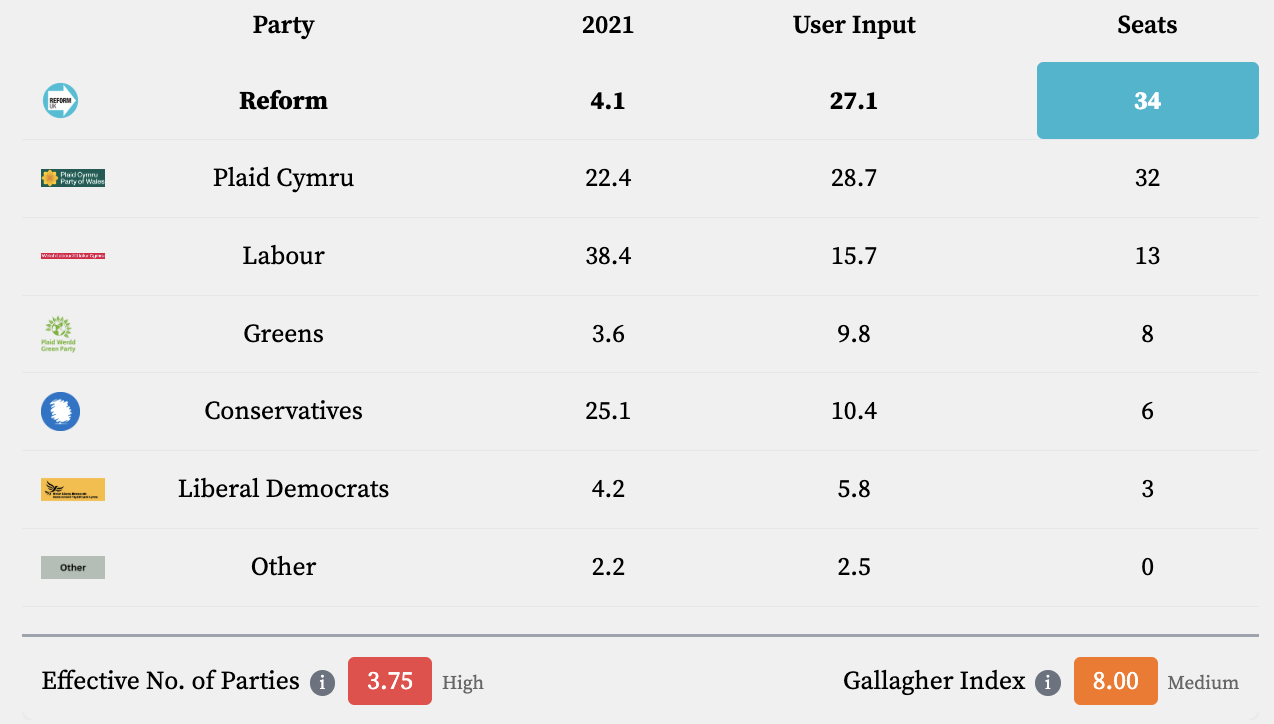
This means Plaid could get the most votes but not the most seats. Not every model has this tendency, some give Plaid more seats than Reform with similar vote shares.
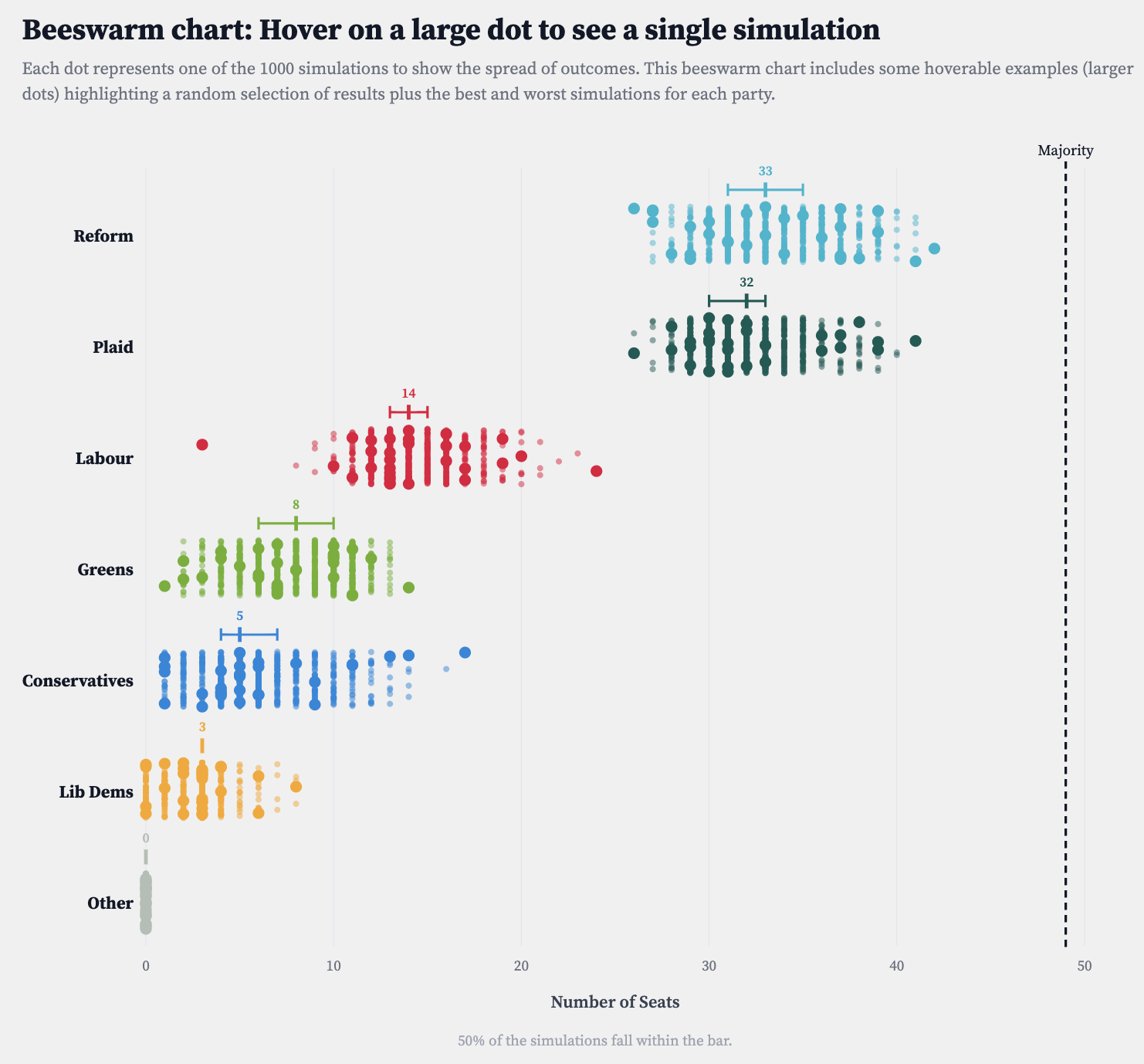
It’s a brand new system, brand new constituencies and Reform have never stood before, so we’re all flying blind here. Our Monte Carlo system thinks Plaid Cymru have about a 40% chance of getting the most seats, not far from a coin flip, but there is a lot of variation.
Governing Wales
So it’s unclear if Plaid will get the most votes or the most seats. But they are clear favourites to take up the post of First Minister for the first time which would mark a sea change in Welsh politics which has been unusually stable for the past century. It is now very likely that Scotland, Wales and Northern Ireland will have First Ministers advocating for the break up of the union and, depending on results, Wales could have a similar share of nationalist members as Northern Ireland. To be fair, there is nowhere near majority support for independence in Wales or Irish re-unification, but it would be a meaningful symbol.
The reason we’re much more confident that Plaid Cymru will have the First Minister than that they’ll have the most seats or votes boils down to simple maths.
Being left-wing means Plaid Cymru have natural allies in the Greens, Labour and even the Lib Dems. If they need support they can call upon some collection of this lot to help them out. This wouldn’t need to be a formal left-wing coalition, they just need enough votes on important votes like budgets and motions of no confidence to keep them in power.
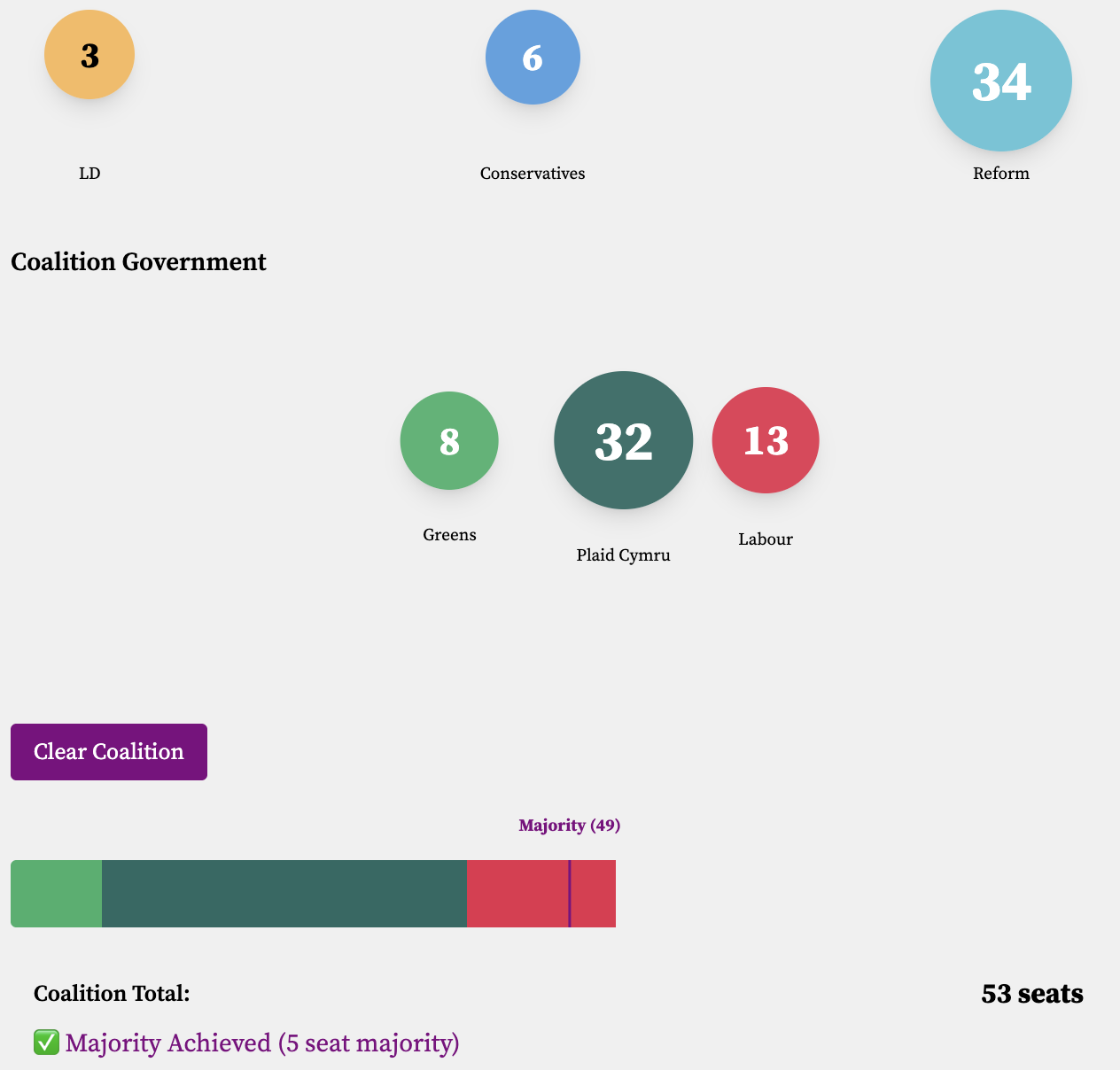
For Reform it’s much trickier. Plaid Cymru, Labour, the Greens and Lib Dems would not work with them under basically any circumstances. The only party that might work with Reform is the Conservatives, and Reform are basically battering them in the election. Reform could well get the most seats, but the Tories might be in 6th - and the better Reform does the worse it could be for the Tories.
There’s nothing shady to this, despite what some Reform backers are claiming, this is what a normal representative democracy looks like. We’re just used to Westminster’s ridiculous electoral system giving complete control to parties that most people did not vote for. Keir Starmer currently leads a huge majority with 35% of the vote which cannot happen in the Senedd.
What’s worse is what this about-face tells us about Reform. Farage’s many guises (UKIP, the Brexit Party, and Reform) have advocated for proportional representation for decades because they (correctly) claimed that FPTP was undemocratic and limited their ability to win. Now they want us to believe that PR is undemocratic…because it limits their ability to win.
This should be a signal to everyone about how seriously we should take Reform’s promises. They’ve proven themselves to be exactly as self-serving as they claim everyone else is even though Plaid Cymru, the Greens and Lib Dems have been absolutely consistent in demanding PR. Reform need to decide if they support a fair system (PR) or an unfair system which forces majorities (FPTP) - not whichever suits their own interests at that particular moment.
Plaid Cymru in opposition
There is one route that would leave Plaid in opposition (barring a huge polling miss). They could let Reform have the first minister position if Reform come first in seats. They could choose to allow Reform to form a minority government, this would not last very long because they have basically no chance of passing a budget. Reform would also have to be seen to be doing something about immigration even though they’d have absolutely no authority to do anything about it because that’s not the Senedd’s job. Reform promising big changes and failing to do anything could be a good campaign tactic for the opposition parties.
In a few months of this they could join with their left-wing allies to remove Reform and take over. This might shut Reform up about being ‘blocked’ but would be a bit of a waste of time and effort for all involved, especially since Reform will complain about it anyway. Plus, Reform could use the opportunity to try to force a fresh election which only they would realistically have the cash for.